
Hebrew
Expanding Scripture Engagement Through Hebrew Enablement
Hebrew is both the historic language of the Old Testament and a living language spoken by millions today. Yet for many readers, classical biblical Hebrew and contemporary Hebrew no longer function as the same register. Scripture may be present, but deep engagement often remains limited by the gap between the ancient text and the language people use every day.
The Hebrew initiative exists to help close that gap. Word For All seeks to support a responsible digital environment where the Masoretic Text, modern Hebrew accessibility, and carefully integrated study resources can work together in one place.
This is not merely about making Hebrew visible. It is about making Hebrew Scripture usable for serious engagement, faithful study, and long-term ministry.
בִּנְאוֹת דֶּשֶׁא יַרְבִּיצֵנִי עַל מֵי מְנֻחוֹת יְנַהֲלֵנִי
Masoretic Text
הוא נותן לי לרבוץ בנאות דשא, הוא מוביל אותי ליד מים שלווים
Contemporary Hebrew
He makes me lie down in green pastures; He leads me beside still waters.
Support for Hebrew Scripture engagement is administered through New Horizons Foundation.
Gifts supporting Hebrew Scripture engagement are administered through New Horizons Foundation in accordance with donor intent.
Who Speaks Hebrew — People First
Hebrew is spoken primarily in Israel and remains central to Jewish identity, culture, education, and public life. It is also present among Jewish communities and Hebrew-speaking diaspora networks worldwide.
- Israeli readers seeking accessible Scripture engagement
- Pastors, teachers, and ministry leaders working in Hebrew
- Students and seminarians developing biblical language fluency
- Readers exploring the relationship between ancient and modern Hebrew
For some, the need is readability. For others, it is depth. For many, it is both.
Reach & Demographics
Hebrew occupies a unique place among language initiatives. Its numerical footprint is smaller than major global languages such as Spanish or French, but its theological, historical, and cultural significance is immense.
- Modern Hebrew serves as a living language for millions of readers
- Biblical Hebrew remains foundational for scholarship, translation, teaching, and theological training
- Hebrew continues to connect Scripture study, Jewish identity, and global Christian interest in the Old Testament
This makes Hebrew a strategic language not only for local access, but for long-term Scripture infrastructure that serves readers across multiple contexts.
Where Hebrew Is Spoken
Hebrew is spoken primarily in Israel, with meaningful presence across global Jewish communities and diaspora networks.
- Israel
- North America
- Europe
- Global diaspora communities
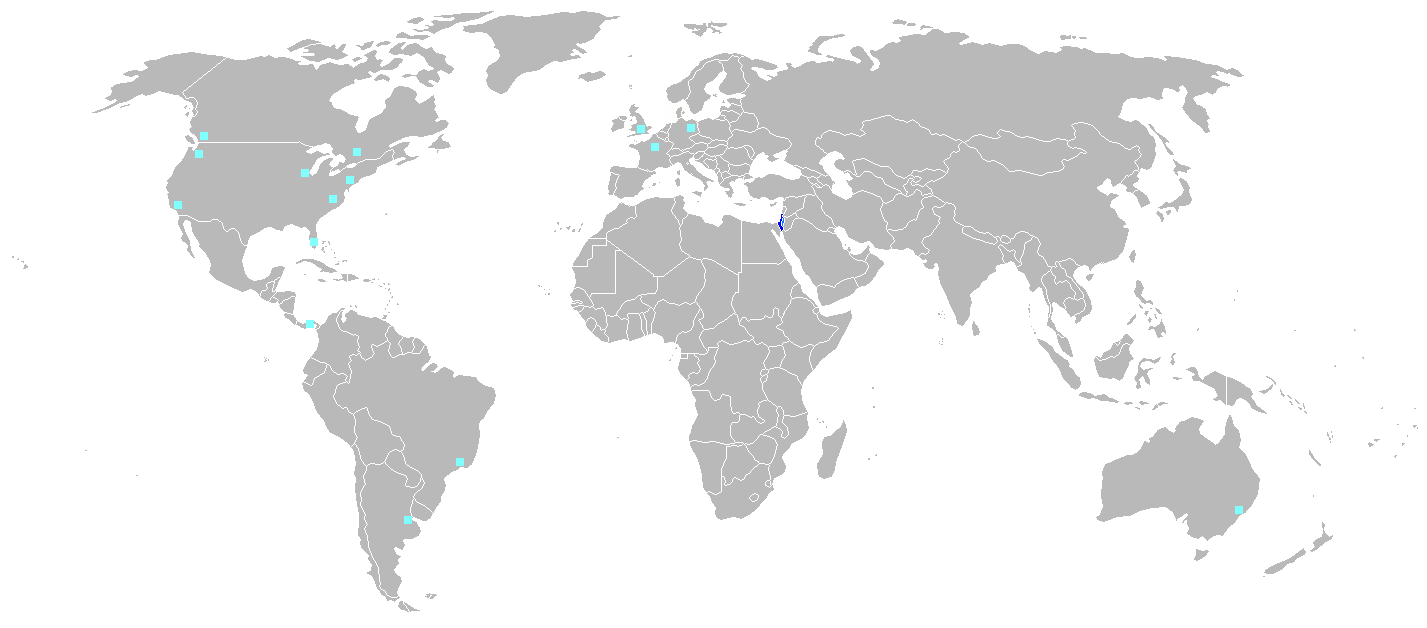
Hebrew's reach extends beyond geography alone. It also carries the weight of Scripture, tradition, interpretation, and identity across generations.
Hebrew in Ministry & Mission
Hebrew enablement serves more than one audience. It supports modern Hebrew readers seeking accessible Scripture, while also strengthening the foundations for responsible engagement with the Hebrew Bible in ministry, translation, and theological education.
- Modern Hebrew accessibility for contemporary readers
- Responsible engagement with the Hebrew Scriptures
- Support for pastors, teachers, and seminary students
- Stronger digital environments for Israel-facing and Hebrew-aware ministry
In this sense, Hebrew is both local and global: rooted in living communities today, yet foundational for the wider Church's engagement with the Old Testament.
Access vs. Engagement
Access means making Scripture readable in a form people can actually use. Engagement means supporting deeper interaction with the text, language, and structure of Scripture over time.
- Readable modern Hebrew editions for contemporary access
- Faithful representation of the Masoretic Text
- Alignment between classical and modern Hebrew layers
- Search, tagging, and study tools that support serious use
This initiative exists at that intersection: not merely making the text visible, but making Hebrew Scripture usable for deep study and sustained discipleship.
Translation & Textual Layers
The Hebrew initiative is not simply a request for another edition. It is a structured effort to bring together multiple textual layers in a coherent digital environment.
- Classical Hebrew support through the Masoretic Text
- Modern Hebrew Old Testament accessibility
- Modern Hebrew New Testament integration where licensing permits
- Additional Hebrew study resources that strengthen understanding and comparison
This makes the initiative more than a translation project. It is a platform-level effort to support Hebrew Scripture as text, language, and study environment.
Why Supporting Hebrew Scripture Engagement Matters
Hebrew matters because the language of the Old Testament remains foundational for theology, interpretation, and discipleship. Yet meaningful engagement with Hebrew cannot be assumed—either for modern Hebrew readers or for those around the world who seek to study Scripture responsibly.
- Modern Hebrew readers deserve accessible Scripture environments
- The Church benefits from stronger engagement with the Hebrew Bible
- Students, pastors, and translators benefit from better Hebrew study infrastructure
- Digital stewardship makes long-term, responsible access possible
Supporting Hebrew Scripture engagement is therefore both pastoral and foundational: it serves living communities today while strengthening the wider Church's relationship to the biblical text.
Partnership & Stewardship
Hebrew enablement requires careful stewardship. It depends on responsible licensing, faithful digital integration, and partnership with organizations that understand both Scripture distribution and long-term textual care.
Word For All approaches this work as infrastructure development: building the conditions under which Hebrew Scripture can be studied, compared, searched, and engaged responsibly in a modern digital platform.
This includes working with Bible societies, rights holders, and mission-aligned partners where appropriate, while ensuring that donor support is applied with clarity, accountability, and long-term usefulness.
Support Hebrew Scripture Engagement
Hebrew Scripture deserves more than static availability. It deserves a responsible study environment that supports access, depth, and continuity across generations.
Your support helps make that possible by strengthening modern Hebrew accessibility, classical text infrastructure, and the tools required for serious engagement with Scripture.
Gifts supporting Hebrew Scripture engagement are administered through New Horizons Foundation in accordance with donor intent.